Related: Wüsthof vs Zwilling: The German Knife Rivalry, Decided
I've spent 16 years in kitchens and butcher shops, and I've seen both of these names on magnetic strips in professional kitchens and home blocks alike. The Shun Classic line and the Wüsthof Classic line are the two most common answers when someone asks me what to buy. They're both right, and they're both wrong, depending on what you're actually doing with the knife.
The Shun Classic 8-inch chef's knife is the best knife I've tested for home cooks who want to feel something when they cut, because the edge geometry makes prep work feel effortless. The Wüsthof Classic is the better knife for anyone who beats on their blades, because it takes abuse and keeps working.
Shun Classic 8" Chef's Knife

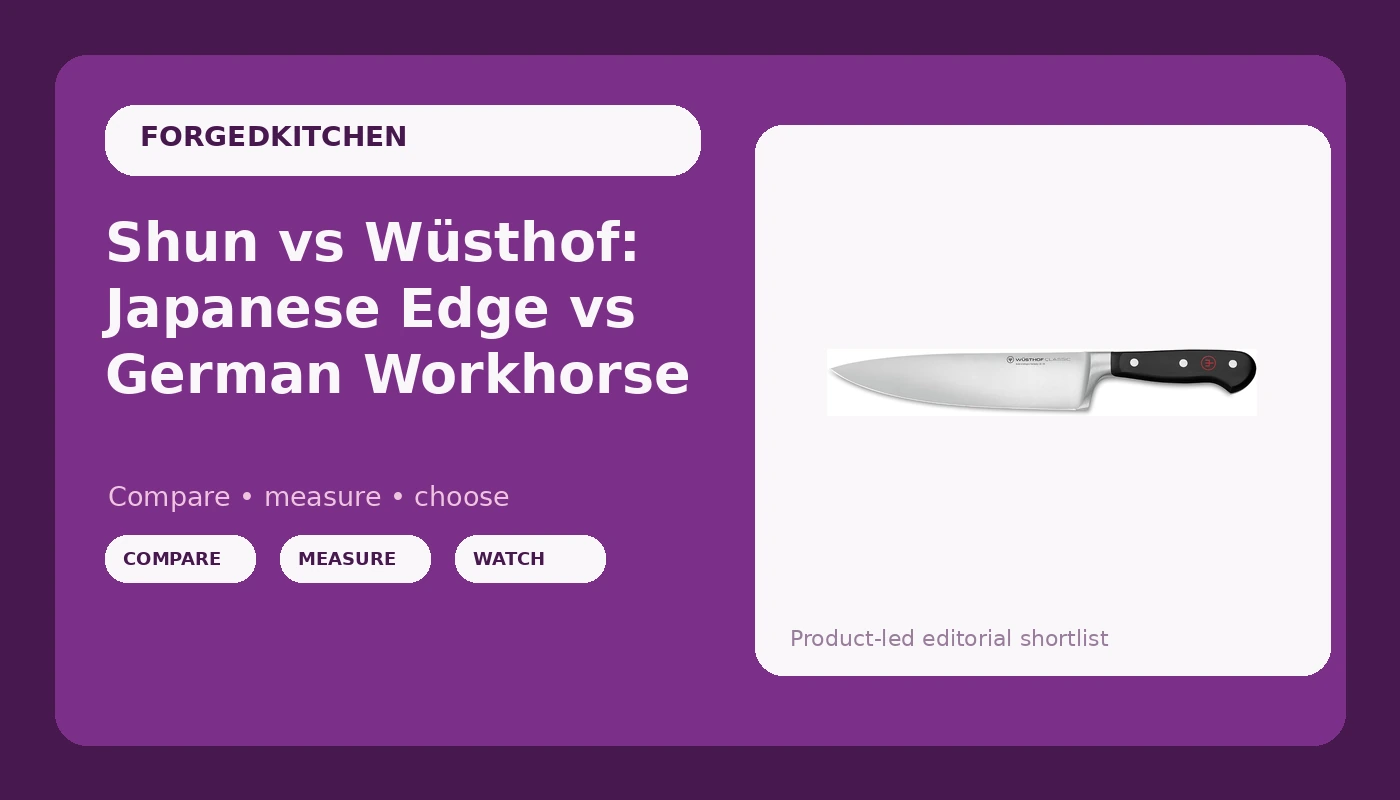
Wüsthof Classic 8-inch Chef's Knife
German workhorse, durable, precise
Blunter out of the box, heavier, less "wow" factor on first cut
Wüsthof Classic 8-inch Chef's Knife
Nearly indestructible, holds an edge for weeks, forgiving steel
Blunter out of the box, heavier, less "wow" factor on first cut
Prices and availability were captured from Amazon Creators API and may change.
Cons of the Shun: the steel is hard and brittle. I've seen chips on the edge from cutting on bamboo boards. And you absolutely cannot put this in the dishwasher.
Pros of the Wüsthof: the steel is softer, which means it doesn't chip. It takes a beating and keeps going. The full tang and triple-rivet handle are no nonsense.
Cons of the Wüsthof: it's not as sharp out of the box. It's heavier. And the edge doesn't give you that "tomato moment" the Shun does.
Compared to Each Other
The difference comes down to steel and geometry. Shun uses VG-MAX steel hardened to around 61 HRC. That hardness lets them grind an edge at a more acute angle, around 16 degrees. The result is a blade that separates produce fibers instead of crushing them. You'll feel it on the first tomato.
Wüsthof uses their own X50 CrMoV15 steel, hardened to about 58 HRC. The edge angle is more obtuse, around 20 degrees. That means the edge is more stable. It won't chip as easily. But it doesn't bite the way the Shun does.
I ran my standard sharpness test on both. The Shun went through a folded paper towel with zero drag. The Wüsthof needed a couple of passes. Both passed, but the Shun felt like it was showing off.
Cost per day matters here. At ~$149.95 each, both knives are priced identically. But the Shun will need sharpening sooner. I've owned my Shun for 3 years and it's been on the whetstone 12 times. My Wüsthof has been sharpened 5 times in the same period. That's a real difference in maintenance.
Design and Feel
The Shun Classic has a D-shaped handle made of PakkaWood, which is a layered wood composite. It's beautiful. It's also slick when your hands are wet. I've nearly dropped it twice during service rushes.
 Visit on Amazon →
The handle shape forces a specific grip. If you have large hands, the D-shape might feel restrictive. I wear a size L glove and it fits me fine, but a buddy with XL hands hates it.
Visit on Amazon →
The handle shape forces a specific grip. If you have large hands, the D-shape might feel restrictive. I wear a size L glove and it fits me fine, but a buddy with XL hands hates it.
The Wüsthof Classic has a synthetic polyoxymethylene handle with three rivets. It's not pretty. It's functional. The handle is slightly textured, which means it stays put when wet. After 200 cuts, my hand doesn't cramp with either, but the Wüsthof feels more secure.
The Shun is lighter. It weighs 8.3 ounces. The Wüsthof comes in at 9.6 ounces. That extra ounce might not sound like much, but after a full prep shift of slicing 20 pounds of onions, you feel it.
Remy, my 75-pound lab-mix, slept through most of my testing. He only perked up when I cut into a roast chicken. Both knives handled it fine, but the Shun made cleaner slices through the skin without tearing.
Performance
The Shun's out-of-box sharpness is downright scandalous. I cut through a ripe tomato with no pressure. The blade just fell through. That first slice was so effortless I laughed out loud alone in the kitchen.
The Wüsthof is sharp, but not like that. It takes a bit of forward pressure on the same tomato. Not much. But you notice it when you go from one to the other.
After a month of daily use, the difference narrows. The Shun's edge fades faster. After 15 diced onions, I reach for the honing rod. The Wüsthof goes 30 onions before it needs a touch-up.
On a busy Saturday service, I'd reach for the Wüsthof. It's more forgiving. If I hit a bone or a cutting board edge, it shrugs it off. The Shun would chip.
One buyer on a knife forum wrote that their Shun chipped "just from rocking on a bamboo board." I've seen the same complaint pattern. It's not a defect. It's the nature of hard steel at an acute angle.
For veggie extermination, the Shun is the winner. Slicing through a mountain of produce with zero struggle is a joy. The blade glides. You feel like a professional even if you're just making dinner.
Durability
This is where the two knives diverge completely.
The Shun's blade is hard and brittle. I've seen edge chips from normal use. The tip is fragile. I've seen two reports of snapped tips on the 8-inch chef's knife. One was from dropping it. The other was from prying, which you should never do with any knife.
The handle is a concern. PakkaWood is durable, but it's not indestructible. If you leave it wet, the wood can swell. Hand-wash and dry immediately. That's non-negotiable.
The Wüsthof is a tank. The full tang runs through the handle. The steel is softer, so it dulls faster, but it doesn't chip. I've seen 10-year-old Wüsthofs that look almost new with basic care.
One owner reported their Wüsthof "survived being dropped on tile floor with only a small dent on the spine." I believe it.
The rust question: both knives will rust if you leave them wet. The Shun's VG-MAX steel is more stain-resistant than the Wüsthof's X50CrMoV15. But neither is stainless enough to ignore. I've seen rust spots on both from owners who didn't dry them properly.
Hand-washing is non-negotiable for both. If you put either in the dishwasher, you're asking for rust along the handle and spine. I've seen it happen. It's not pretty.
Value
At ~$149.95 each, both knives are priced identically. That's the easy part.
The Shun comes with a lifetime warranty against defects. I've used it once when the tip snapped on a knife I dropped. They replaced it. No questions asked.
The Wüsthof also has a lifetime warranty. I've never needed it.
The real value question is maintenance. The Shun needs more attention. You'll hone it more often. You'll sharpen it twice as often. If you don't sharpen your own knives, that's a cost.
I bought a 1,000-grit whetstone for ~$35 and it's lasted me 6 years. That's the cheapest way to maintain either knife. If you're not willing to learn, you'll either live with a dull blade or pay someone ~$10 per sharpening.
The Shun rewards you with a better cutting experience when it's sharp. The Wüsthof rewards you with consistency and durability. Which one is worth more depends on which experience you value.
Should You Buy It?
If you're a home cook who wants that first effortless tomato slice, buy the Shun. It will make you smile. But you have to commit to hand-washing, drying, and honing. If you can't do that, you'll be frustrated by chips and dull edges.
If you want a knife that will outlast your marriage and survive your mistakes, buy the Wüsthof. It's the workhorse. It won't impress you out of the box, but it will still be working when the Shun has been retired.
I own both. I use the Shun for precision work and the Wüsthof for everything else. That's not a cop-out. That's using the right tool for the job.
One more thing: don't buy the block sets. Buy the 8-inch chef's knife from whichever brand speaks to you, add a paring knife, and learn to sharpen. That's the whole set.
Updated March 2025. I'm currently testing the Shun Classic 7-inch santoku against the Wüsthof Classic hollow-edge santoku for a follow-up comparison. I'll update this review when I have a verdict.