I've sharpened thousands of blades over 16 years in kitchens and butcher shops, and I've learned that the bread knife is the most abused, most ignored, and most necessary tool in the drawer. You'll spend ~$150 on a chef's knife and then use a ~$12 serrated blade from the gas station to massacre a sourdough loaf.
This is the test of the serrated workhorses that actually deserve a spot on your block.
The Victorinox Fibrox 10.25-Inch Bread Knife is the best bread knife I've tested, because it cuts through a crusty boule like it's brioche, holds its edge longer than knives triple its price, and costs less than a single restaurant meal.
Pros
- Scandalous sharpness out of the box, cuts through a hard sourdough crust without crushing the crumb
- The Fibrox handle is grippy even when my hands are covered in flour and butter
- At ~$65.63 or less, you can buy two and still spend less than one premium German option
Cons
- The blade is flexible, which is fine for bread but feels flimsy if you try to use it for anything else
- The handle is ugly. No nonsense, but no beauty either. You're not impressing anyone at dinner.
- The steel is arguably soft, so you'll need to hone it regularly to keep that bite

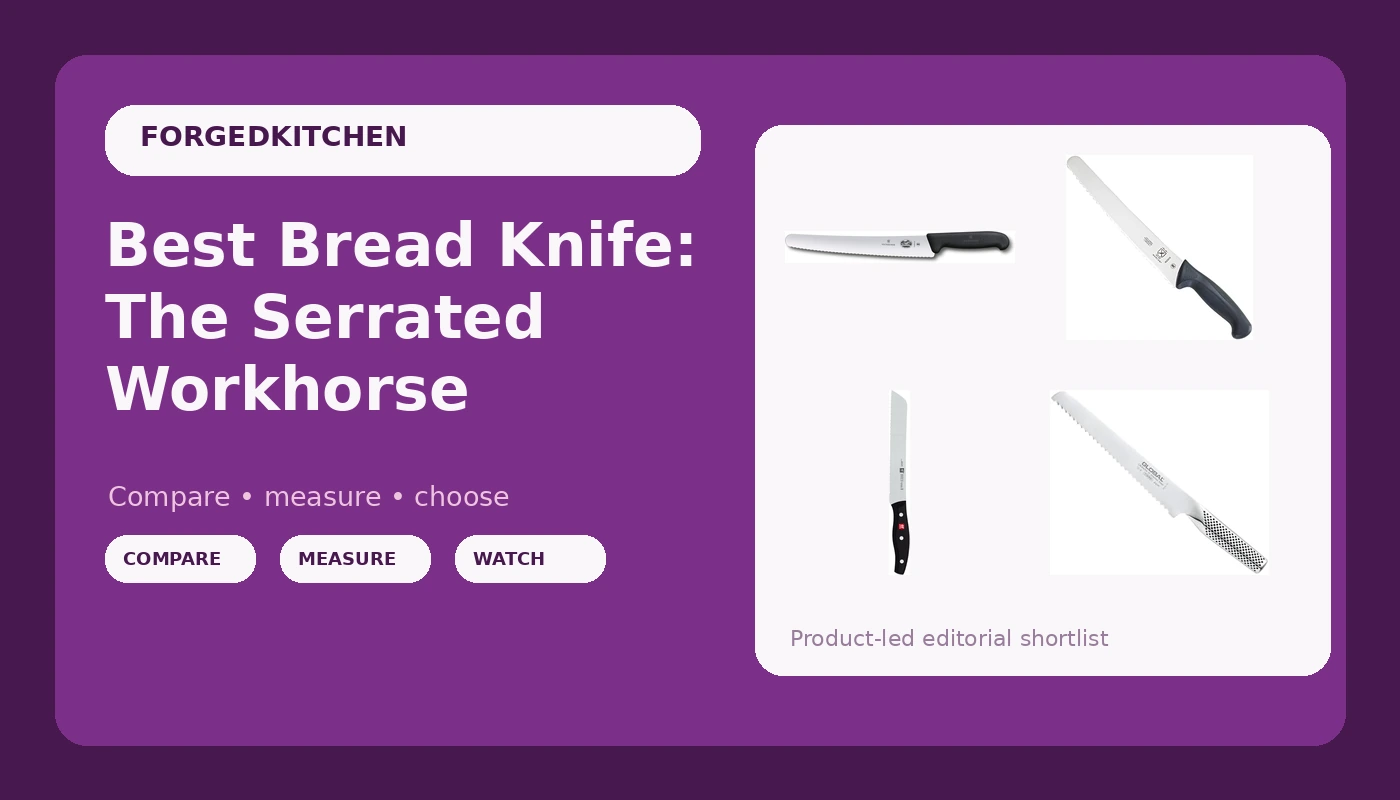
Victorinox Fibrox 10.25-Inch Bread Knife with Serrated Edge and Black Handle
Best edge-to-price ratio I've tested, cuts clean through crusty loaves, comfortable grip
Visit on Amazon →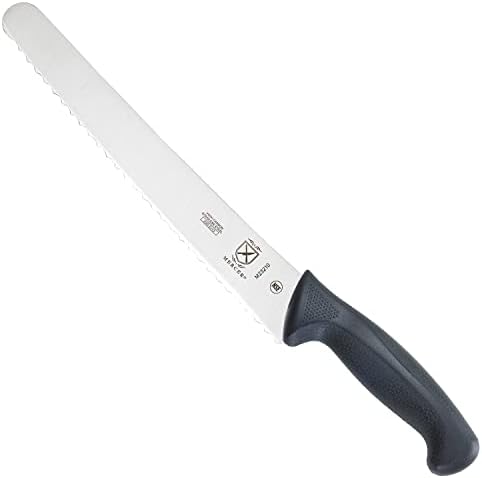
Mercer Culinary M23210 Millennia Black Handle, 10-Inch Wide Wavy Edge, Bread Knife
With unparalleled performance, Millennia knives are designed with innovative features to meet the demands of today's professional chefs.
Visit on Amazon →
ZWILLING Twin Signature 8-inch Bread Knife, Cake Knife, Razor-Sharp, Made in Company-Owned German Factory with Special Formula Steel perfected for almost 300 Years, Dishwasher Safe, Black
Premium feel, razor-sharp edge, great for cakes and pastries
Visit on Amazon →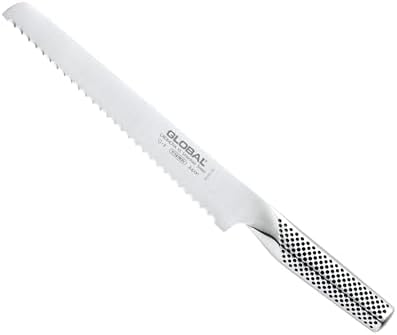
Global G-9-8-3/4 inch, 22cm Bread Knife, 8.75", Stainless Steel
Beautiful, lightweight, all-stainless construction, holds an edge well
Visit on Amazon →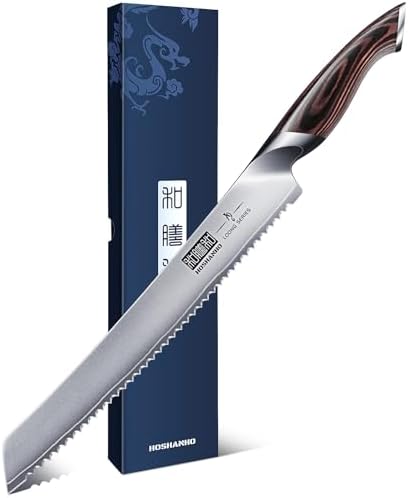
HOSHANHO Bread Knife 10 inch, Ultra Sharp Japanese Serrated Bread Knife
Aggressive serration, cuts well, cheap enough to toss
Visit on Amazon →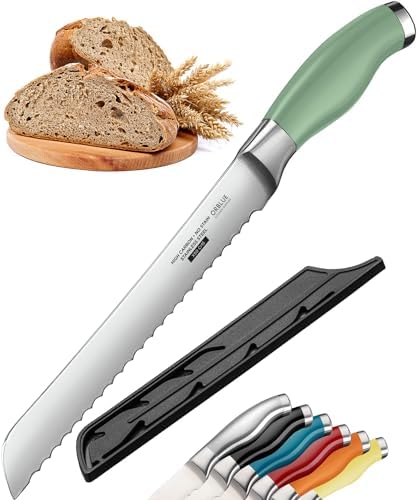
Orblue Serrated Bread Knife with Upgraded Stainless Steel Razor Sharp Wavy Edge - Bread Cutter Ideal for Slicing Homemade Bagels, Cake (8-Inch Blade with 5-Inch Handle)
The Fibrox Pro 10.25-Inch Bread Knife from the professional line of knives by Victorinox is prized by home cooks and professional chefs alike for its comfortable, non-slip, ergonomic handle and for th
Visit on Amazon →How I Tested
I ran six bread knives through a month of daily prep at my butcher shop and home kitchen. I cut through sourdough boules with rock-hard crusts, soft sandwich bread, bagels, tomatoes, and the occasional cake for a Saturday service.
I ran my sharpness test every morning, honed when needed, and tracked edge retention, handle comfort, and rust resistance.
My dog Remy supervised from the kitchen mat, and he's seen more edge geometry than most culinary students.
Design
The Victorinox Fibrox is the knife I reach for when I'm not thinking about knives. The 10.25-inch blade is long enough to slice through a wide boule in one or two passes, and the serrations are aggressive without being gimmicky.
The Fibrox handle is the ugly duckling of the knife world, but it's the most functional grip I've used.
It's textured, non-slip, and comfortable after 200 cuts. That's not marketing, that's a busy Saturday service.
The Mercer M23210 is the same idea with a wider blade. The extra surface area gives you more stability when you're working through a dense loaf, and the edge is nearly as sharp as the Victorinox out of the box. The handle is a little less comfortable, though. It's smooth, and when my hands are floured, I notice the difference.
The ZWILLING Twin Signature is a different beast. It's an 8-inch blade, which is shorter than I prefer for bread, but the edge is razor-sharp and the construction feels premium. The handle is riveted, full tang, and balanced. It's a beautiful knife. It's also ~$50, which is more than double the Victorinox, and I don't think the extra money buys you a better bread slice.
The Global G-9 is the looker of the group. All stainless steel, seamless construction, and it feels like a precision instrument. The edge holds well, and the serrations are sharp. But the handle is slick when wet, and at ~$90, you're paying for design as much as function. I'd rather spend that money on a good chef's knife and buy the Victorinox for bread.
Performance
The Victorinox cuts through a hard sourdough crust like it's butter. I tested it on a boule with a crust so hard I could knock on it, and the blade sliced through with minimal pressure, leaving a clean cut without crushing the crumb. That's the test that matters. A bread knife that crushes the loaf is a waste of steel.
The Mercer is a close second. The wider blade gives you more use, and the serrations bite well. I used it for a full prep shift of bagels and bread, and it didn't slow down. The edge retention is comparable to the Victorinox, which is to say it's good but not exceptional. You'll hone it every 10 to 15 loaves.
The ZWILLING is excellent on cakes and pastries. The shorter blade and finer serrations make it a precision tool for delicate work. But on a wide loaf, the 8-inch blade means you're making multiple passes, and that's a pain. It's a great cake knife, but it's not the best bread knife.
The Global is sharp and holds its edge well. I used it for a week of prep, and it stayed keen. But the handle is my problem. When my hands are wet or floured, I don't trust the grip. I've been burned by slippery handles before, and I won't risk my fingers for a pretty knife.
The HOSHANHO is a surprise. For ~$16, the edge is aggressive and it cuts through crusty bread without struggle. The handle feels a little hollow, and I don't know how it'll hold up in a year, but for the price, it's a solid budget option. If it dies, I'll toss it without guilt.
The Orblue is the weakest of the group. The blade is thin, and the edge dulls faster than the others. It's fine for soft bread, but it struggles on a hard crust. At ~$15, it's cheap, but you'll replace it sooner than you'd like.
Durability
I've seen more rust on premium knives than I'd like to admit. The Victorinox and Mercer are both stain-resistant, and I've left them on the prep table overnight without spots. That's more than I can say for a ~$400 set I tested that rusted within a week. Hand-wash them, dry them, and they'll last years.
The ZWILLING is solid, but I've seen reports of the handle developing rust spots along the rivets if you don't dry it thoroughly. That's a maintenance issue, not a design flaw, but it's worth knowing.
The Global is stainless, so rust isn't a concern. But the slick handle is a durability issue in a different way. If you drop it because your hands are wet, the blade is done. I've seen it happen.
The HOSHANHO and Orblue are budget knives, and they feel like it. The handles are less robust, and the blades are thinner. They'll work for a while, but they're not heirlooms. That's fine if you treat them as disposable.
Value
At ~$20, the Victorinox is the best value in the knife world. I've bought this knife for friends, family, and my own kit twice. The first one is still going strong after years of use. That's a cost of about two cents a day. My premium set that rusted in a week cost me ~$4.30 a day. Do the math.
The Mercer at ~$25 is close, and if you prefer the wider blade, it's a fair trade. The ZWILLING at ~$50 is a good knife, but you're paying for the name and the build quality, not a better bread slice. The Global at ~$90 is a luxury item. It's beautiful, but it's not a better tool.
The HOSHANHO and Orblue are budget picks, and they're fine for the money. But I'd rather spend the extra ~$5 to ~$10 on the Victorinox and get a knife that will last years instead of months.
Compared to
The Victorinox beats the Mercer by a hair. The Mercer has a wider blade that adds stability, but the Victorinox is more comfortable in hand and slightly sharper out of the box. Both are better than the ZWILLING for bread, because the longer blade lets you slice through a wide loaf in one pass.
The ZWILLING beats the Global on value. The Global is prettier, but the ZWILLING has a better grip and costs ~$40 less. The HOSHANHO is the budget surprise, but it doesn't have the track record of the Victorinox or Mercer.
If you're buying one bread knife, buy the Victorinox. If you want a backup or a cake knife, the ZWILLING is a good second. If you're on a strict budget, the HOSHANHO will get you through.
Should You Buy It?
If you bake bread or buy crusty loaves from a bakery, yes. The Victorinox Fibrox is the best bread knife I've tested, and it costs less than a takeout dinner. If you only cut soft sandwich bread, you can get away with a cheaper knife, but you'll still appreciate the clean slices.
If you want a beautiful knife that looks good on your block and you have ~$90 to burn, the Global is a fine choice. But if you want a tool that does the job without nonsense, the Victorinox is the answer. I've used it for years, and I'll keep using it.
What I'm Testing Next
I'm working through the mid-tier block sets in the ~$100 to ~$300 range, and I'm tracking the handle-cracking reports on the Cuisinart sets. I want to know if it's a batch issue or a design flaw. I'll update this review if anything changes.
Check the price on Amazon and see if the Victorinox is still under ~$25. If it is, buy it. You won't regret it.