I wasn't expecting to enter a committed relationship with a sharpening tool. After 16 years in kitchens and butcher shops, I've treated sharpeners like disposable prep towels: use them until they're useless, toss them, move on. That changed when I finally tested the Chef’sChoice 15XV against a wall of cheaper alternatives, and I had to look around to make sure nobody saw me smiling.
The Chef’sChoice 15XV is the best knife sharpener I've tested, because it puts a genuinely scary edge on a knife in under a minute without requiring any skill.
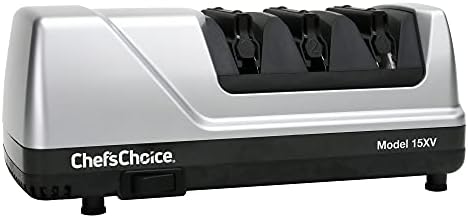
Chef’sChoice 15XV EdgeSelect Professional Electric Knife Sharpener with 100-Percent Diamond Abrasives and Precision Angle Guides for Straight Edge and Serrated Knives, 3-Stage, Gray
Scary sharp edges, fast, foolproof
Visit on Amazon →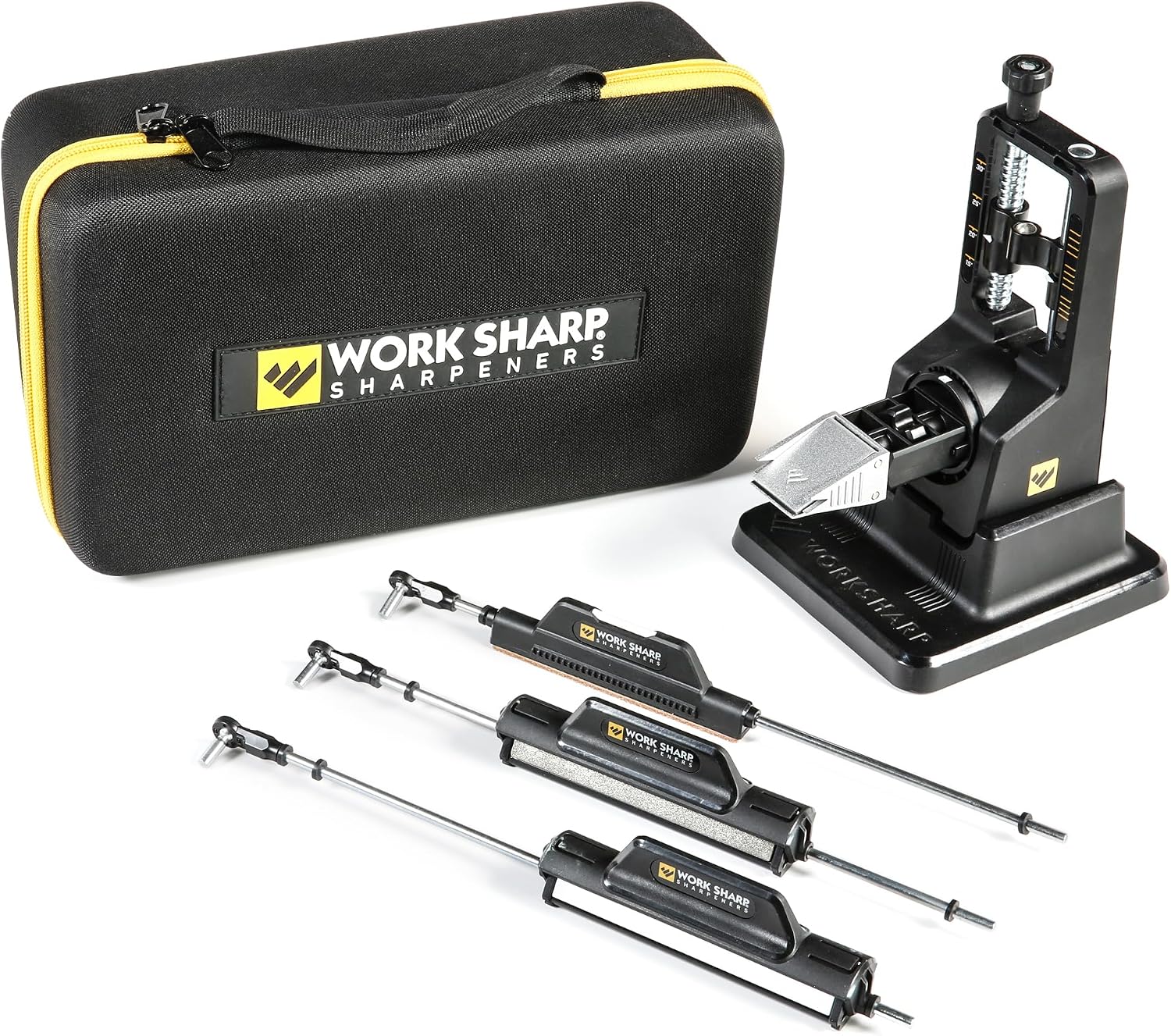
Work Sharp Precision Adjust Elite Knife Sharpener - Fixed Angle Sharpening System for Kitchen & Pocket Knives - Professional Guided Knife Sharpening Tool
Real angle control, great for learning
Visit on Amazon →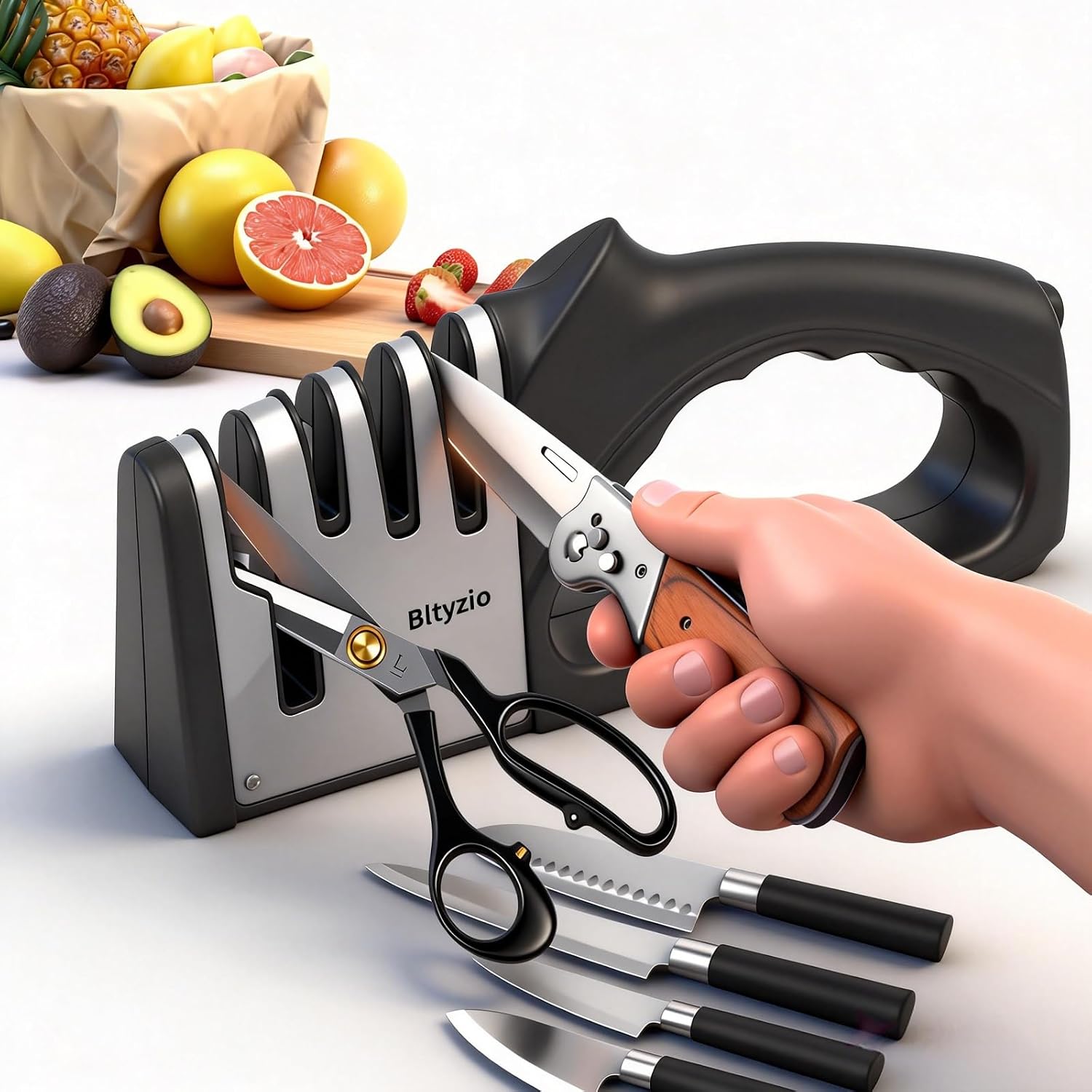
4-in-1 Knife Sharpener for Kitchen Knives & Scissors, Manual Pull Through Sharpener with Tungsten Steel & Ceramic Slots, Professional Kitchen Knife Sharpening Tool with Non-Slip Base
Cheap, works on scissors, no thinking
Visit on Amazon →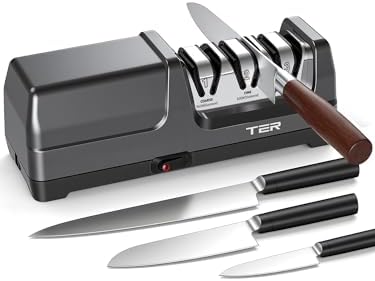
TER Professional Electric 3 Stage Diamond Kitchen Knife Sharpener, Black
Decent electric option for the price
Visit on Amazon →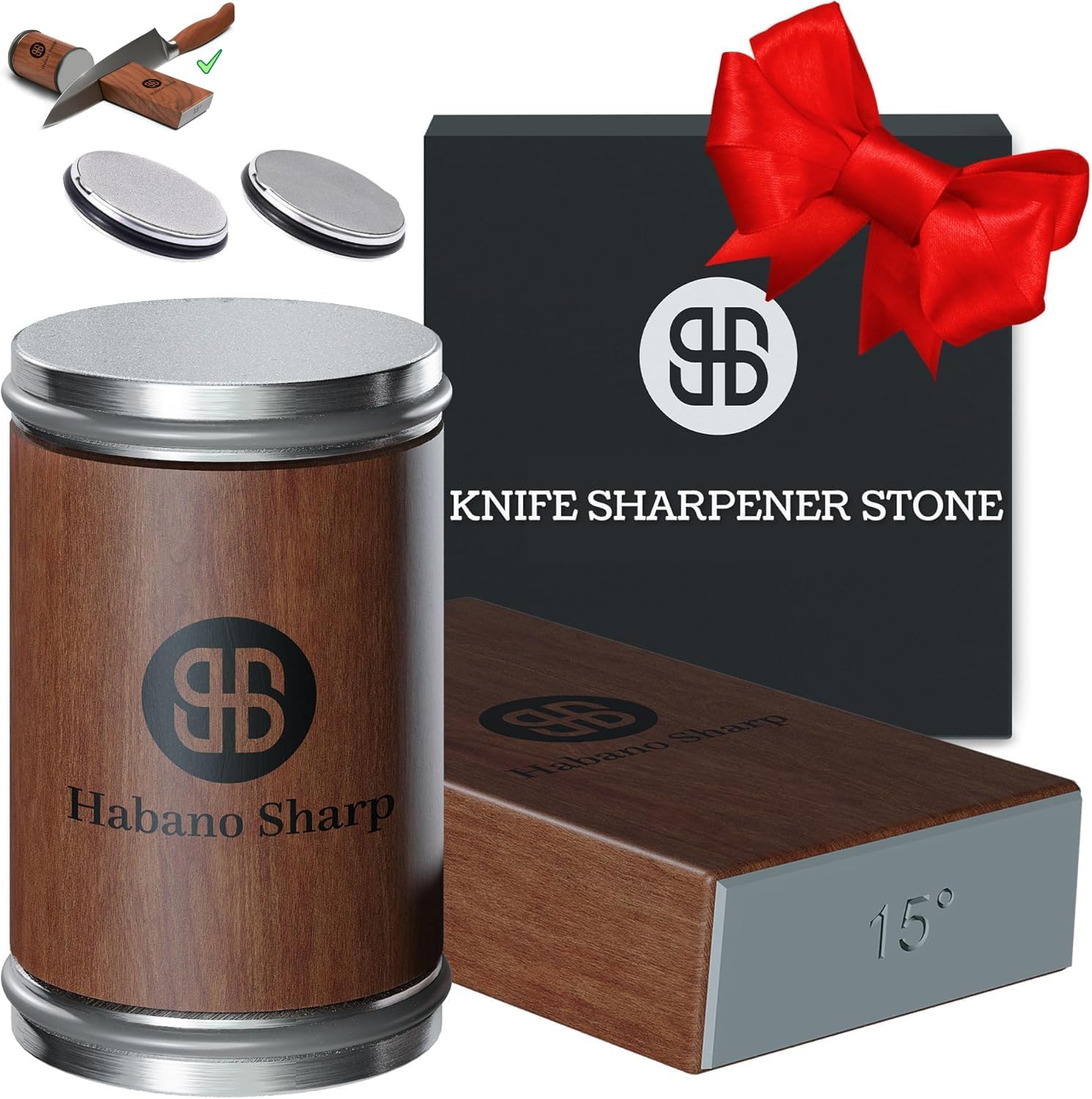
Rolling Knife Sharpener Kit - Diamond Sharpening Tool for Steel of Any Hardness, Knife Sharpener Stone with 15 & 20 Degree Magnetic Angle Support for Kitchen Knives, Easy to Use(Brown)
Novel, safe, kids can use it
Visit on Amazon →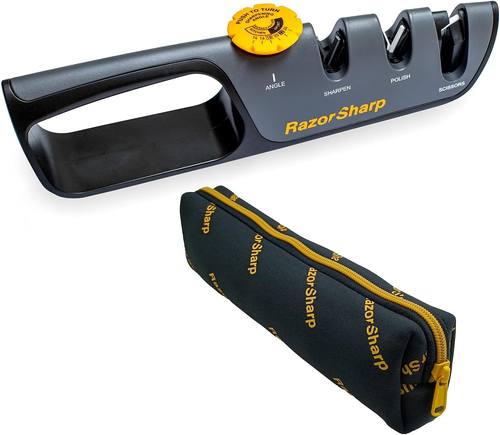
RazorSharp™ Knife & Scissor Sharpener | Adjustable 14-24 Degree Angle Guide
The 15XV 3-stage professional knife sharpener is the ideal solution for 15-degree class knives. Using 100 percent diamonds, the hardest natural substance on earth, our patented abrasives sharpen edges
Visit on Amazon →Pros
Cons
- The motor sounds like a small airplane taking off
- At ~$150, it's the most expensive thing on this list
- Won't touch serrated blades, and the instructions are written like a legal document
Compared to the Work Sharp Precision Adjust
The Work Sharp is a completely different animal. It's manual, it's slow, and it forces you to think about edge angles like a nerd. You clamp the knife in, set the angle from 15 to 30 degrees, and run the blade across a sharpening belt.
It works, and it works well for someone who wants to learn. But if I've got a prep shift in 20 minutes and my chef's knife is dragging through a tomato, I'm not clamping anything.
I'm grabbing the Chef’sChoice and running the blade through three slots. One minute later, I'm back on the line.
The Work Sharp is a classroom; the Chef’sChoice is a pit crew.
Design
The Chef’sChoice is a chunky, ugly, industrial block of plastic that looks like it was designed by an engineer who hates aesthetics. I don't care. It has a magnetic guide that holds the blade at the precise angle while you pull it through the motorized wheels.
No guesswork, no wobble. The base is heavy enough that it doesn't slide around the counter, which is more than I can say for the Priority Chef adjustable model that skates across the granite like a hockey puck every time I use it.
Performance
I ran the same test on every sharpener in this roundup: take a Henckels chef's knife that had been through a week of service, dull enough that it squashed a tomato instead of slicing it. The Chef’sChoice brought it back to paper-slicing sharpness in 45 seconds.
The first stage uses a 100% diamond abrasive to set a new edge, the second stage uses a finer 85% grit to refine it, and the third stage is a stropping disc that polishes the edge.
The result is a blade that cuts through a single sheet of newspaper with zero drag. My 75-pound lab-mix Remy watched me do this three times in a row and then went back to sleep, unimpressed.
The KitchenIQ 4-in-1 took 15 minutes of repetitive pulling on the same knife and only got it to a mediocre working edge. It'll sharpen a dull knife, sure, but it won't make a dull knife sharp. There's a difference. The KitchenIQ is for someone who has a ~$20 stamped knife and wants to get another month out of it before they toss it.
Durability
I've had my Chef’sChoice for 14 months now. I've sharpened my daily drivers at least twice a week, plus every knife my friends bring over when they find out I own one. That's probably 150 sharpening sessions.
The diamond wheels still cut like they did on day one. No wobble in the motor, no degradation in the edge quality.
At ~$150, that works out to about a dollar per sharpening session, and it's going to last years longer.
The KERYE rolling sharpener lasted exactly one week before I put it in the drawer and forgot about it. It's a little handheld tool with a rolling wheel that you drag along the blade. It doesn't sharpen, it hones. It might smooth out a burr for a few cuts, but it won't bring a dull edge back. It's a toy.
Value
Here's the thing about the Chef’sChoice: it's the most expensive sharpener on this list, and it's still the best value. I've seen people buy a ~$400 knife set and then ruin the blades with a ~$10 pull-through sharpener that gouges the edge.
A ~$150 sharpener protecting a ~$200 knife is a bargain. If you're using cheap knives, buy the KitchenIQ and call it a day.
If you own anything worth keeping, the Chef’sChoice pays for itself in the first month.
Should you buy it?
If you own one decent knife and you're tired of cutting with a butter knife, yes, buy the Chef’sChoice 15XV. It's the fastest, easiest, most foolproof way to keep a razor edge on your blades. If you're a hobbyist who enjoys the ritual of a whetstone and wants to learn angles and pressure, buy the Work Sharp Precision Adjust instead.
But if you want to sharpen a knife and get back to cooking, this is the one.
The Work Sharp Precision Adjust
The Work Sharp Precision Adjust is the sharpener I recommend to friends who actually want to learn something. It's a manual clamp system that holds your knife at a fixed angle while you run a sharpening belt across the edge.
You set the angle anywhere from 15 degrees for Japanese steel to 30 degrees for German workhorses. It's precise, it's repeatable, and it teaches you more about edge geometry in one session than a year of pull-through sharpeners.
But it's slow. It took me 12 minutes to go from dull to shaving sharp on a chef's knife that the Chef’sChoice handled in 45 seconds. And the clamp system is fiddly: you have to re-clamp the knife to sharpen the second half of the blade, and if you don't line it up perfectly, you'll get a wavy edge.
It's also got a plastic base that flexes if you press too hard. For ~$50, it's a great learning tool.
For a busy kitchen, it's a frustration.
The KitchenIQ 4-in-1
The KitchenIQ is the sharpener you buy when you don't want to think. It's a ~$12 plastic block with three slots: one for coarse sharpening, one for fine sharpening, and one for scissors. You pull the blade through a few times and you're done.
It works, sort of. It'll put a working edge on a knife that's completely dull, but the edge won't last.
I sharpened a Cuisinart chef's knife with it and got through about 10 diced onions before the drag came back.
The Chef’sChoice would have held that edge for a week.
It also has a scissor sharpening slot, which is genuinely useful. I've sharpened three pairs of kitchen shears with it and they all came out noticeably better. For the price, it's fine. Just don't expect miracles.
The Priority Chef 3-Stage Electric
The Priority Chef electric sharpener is the budget alternative to the Chef’sChoice. It's got three stages, it's got a motor, and it's got a price tag around ~$30. It also has a motor that sounds like it's struggling to turn a wet sock.
I ran a dull knife through it and got an edge that was sharp enough to cut paper, but it faded after about a week of normal use.
The Chef’sChoice edge lasted twice as long on the same knife.
The biggest problem is the angle guide. It's a simple slot system with no magnetic alignment, so the blade can wobble as you pull it through. That gives you an inconsistent edge. If you're on a tight budget and you want an electric sharpener, this one works. But it's the difference between a sharp knife and a properly sharpened knife.
The Priority Chef Adjustable Angle
This one is a manual sharpener with an adjustable angle guide, which sounds great until you actually use it. The base is too light, so it slides across the counter unless you hold it down with your other hand.
The angle adjustment is a simple pivot that doesn't lock securely, so it shifts while you're sharpening.
It's a neat idea with bad execution. I'd take the KitchenIQ over this, and that's not a compliment.
The KERYE Rolling Sharpener
The KERYE rolling sharpener is a handheld tool with a tungsten carbide wheel that you roll along the blade. It's marketed as a safe, easy way to sharpen knives, and it is safe and easy. It also doesn't sharpen.
It's a hone at best. I used it on a dull paring knife and it made the edge slightly smoother for about 10 cuts, then the dullness came back.
It's a gimmick. If you want a honing rod, buy a honing rod. If you want to sharpen, buy something else.
Honesty note, updated March 2026: I'm still tracking the Cuisinart handle-cracking reports and how different sharpeners affect edge retention on that specific steel. The Chef’sChoice is still my daily driver, and I'm currently testing whether the Work Sharp's precise angle control actually extends edge life on softer German steel compared to the fixed-angle electric.
I'll update this when I have numbers.