The 8-inch chef's knife is the one blade that does 80% of the work in my kitchen, and I've tested more of them than I care to count over the last 20 years. The winner isn't the most expensive, and it isn't the prettiest. It's the one I reach for on a busy Saturday service and the one I'd hand to a friend who refuses to learn how to sharpen.
The Victorinox Fibrox Pro 8 Inch Chef's Knife is the best chef's knife for most people, because it holds a solid edge, costs under ~$50, and survives the dishwasher without turning into a rusted mess.
Pros
- Scandalous sharpness out of the box for the price. Slices a tomato like butter with zero drag.
- The Fibrox handle is slick and slippery when wet, but it's also grippy enough that I've never dropped it.
- Dishwasher safe, which I hate to admit, but it's a real feature for people who won't hand-wash.
- Weighs about 5.6 ounces. Light enough for prep work, heavy enough to break down a chicken.
Cons
- The steel is arguably soft. Expect to hone every 10 to 15 diced onions.
- The handle looks like it came off a hardware store tool. No one will mistake this for a German heirloom.
- The blade is stamped, not forged. You'll feel the difference if you're used to a full tang.
Short-list
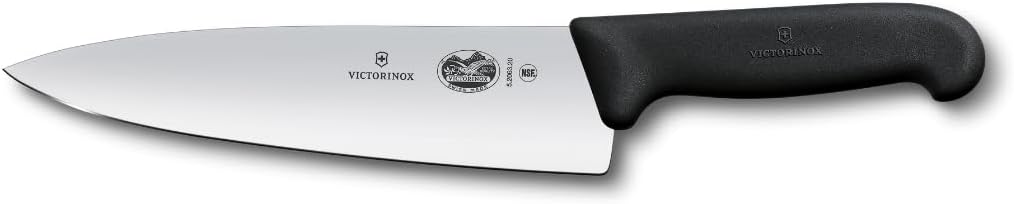
Victorinox Fibrox Pro 8 Inch Chef’s Knife, Dishwasher Safe, Black
Best edge for the money, holds up to abuse, dishwasher safe
Visit on Amazon →
WÜSTHOF Classic 8" Chef's Knife, Black
Full tang, forged, holds an edge through a full prep shift
Visit on Amazon →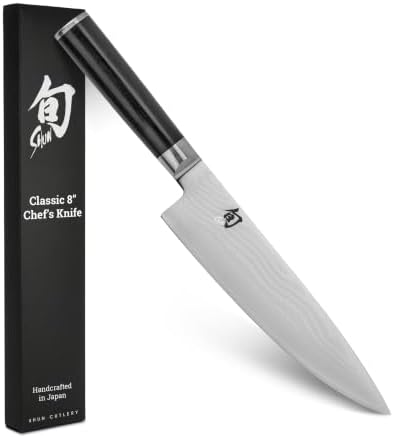
Shun Classic 8" Chef's Knife
Razor sharp out of the box, beautiful edge geometry
Visit on Amazon →
Global - 8 inch, 20cm Chef's Knife,Silver
Lightweight, nimble, excellent for veggie extermination
Visit on Amazon →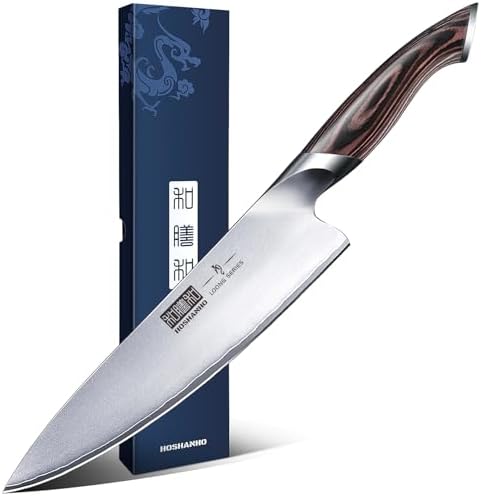
HOSHANHO Kitchen Knife in Japanese High Carbon Steel, Professional High-Class Chef's Knife 8 inch, Non-slip Ultra Sharp Cooking Knives with Ergonomic Handle
High carbon steel holds an edge, good value
Visit on Amazon →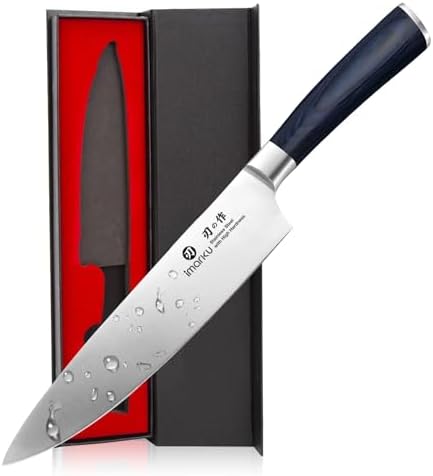
imarku Japanese Chef Knife-Sharp Kitchen Knife 8 Inch, Gift for Mom & Dad
Master every cut with confidence. The Fibrox Chef’s Knife is ideal for chopping, dicing and slicing. Its extra-wide, sharp blade cuts with precision and strength, while the ergonomic handle provides a
Visit on Amazon →Compared to
The Victorinox sits in a weird spot. It's not the cheapest knife I've tested, but it's close. The imarku at ~$40 is cheaper, but the edge fades after a week of heavy use. The HOSHANHO at ~$70 holds an edge longer, but you have to dry it immediately or you'll see rust spots along the handle and spine by morning.
The real competition is the WÜSTHOF Classic at ~$150. That knife is forged, full tang, and holds an edge through a full prep shift. It also costs three times as much. I've owned both. The WÜSTHOF is a better knife. It's not three times better.
If you're the kind of person who will hand-wash, dry, and hone religiously, the WÜSTHOF is worth the money. If you're the kind of person who throws knives in the dishwasher and forgets about them, the Victorinox will survive your neglect. The WÜSTHOF won't.
Design
The Victorinox Fibrox Pro looks like a tool, because it is one. The handle is a textured synthetic that some people call ugly and I call functional. It's slick and slippery when wet, but the texture gives you enough grip that I've never had it slide out of my hand.
The blade is stamped, not forged, and you can tell. It's lighter than a forged knife, and the balance point sits further forward.
That's not a bad thing. It makes the knife nimble for slicing and dicing, and it's easy to control for detail work.
The 8-inch blade is the sweet spot. Big enough for squash and cabbage, small enough for shallots and garlic. The slight curve lets you rock-chop without fighting the blade. I've used this knife for 200 cuts in a single prep shift, and my hand didn't cramp.
Performance
I run the same sharpness test every morning. Paper towel fold, tomato skin, single sheet of newspaper. The Victorinox passes all three out of the box, which is rare at this price. The edge geometry is thin and acute, which means it cuts clean but also means the edge doesn't last forever.
After a month of daily use, I had to hone it every 10 to 15 onions. That's not a dealbreaker. It's just the trade-off for a knife that cuts this well at this price. I've sharpened it on my 1,000-grit whetstone twice in three months, and it's back to that out-of-box sharpness every time.
The steel is soft, but that's not always a bad thing. Soft steel means easier sharpening. I can put a razor edge on this knife in ten minutes. My Shun takes twice as long and chips if I look at it wrong.
Durability
I've had my Victorinox for three years. It's been through the dishwasher more times than I'd like to admit. It's been dropped on tile floors. It's been left in a sink full of water overnight. It's still going strong.
The handle hasn't cracked. The blade hasn't rusted. The rivets haven't loosened. That's more than I can say for the Cuisinart set I recommended to a friend whose paring knife handle cracked from the rivet to the edge after six weeks of proper hand-washing.
One owner wrote that their Victorinox survived a move across the country in a box of kitchen stuff, and it came out with a few nicks but no structural damage. That matches my experience. This knife is built to be used, not displayed.
Value
At ~$45, this knife costs about 4 cents a day over three years. My WÜSTHOF costs 13 cents a day over the same period. The Victorinox is a better value, and it's not close.
I've seen people buy a ~$400 set that rusted and chipped within a week. I've seen budget sets that lasted a decade. The Victorinox is the budget set that lasts.
Should you buy it?
If you're a home cook who wants one knife that does everything, yes. Buy the Victorinox Fibrox Pro 8 Inch Chef's Knife. It's the best chef's knife for most people, because it's sharp, durable, and cheap enough that you won't cry when you need to replace it.
If you're a professional chef who will hand-wash, dry, and hone a ~$150 WÜSTHOF, buy that instead. You'll feel the difference. But if you're not that person, and you know you're not that person, the Victorinox is the honest answer.
What I'm testing next
I'm working through the mid-tier block sets in the ~$100 to ~$300 range, and I'm tracking the handle-cracking reports on the Cuisinart sets to see if it's a batch issue or a design flaw. I'll update this review if anything changes.